

Search Results
Results 1 - 25 of 25
Page 1 of 1
Previous
Next
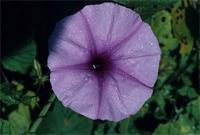
![Ipomoea ficifolia Lindl. var. laxiflora [family CONVOLVULACEAE]](/fsi/img/size1/alukaplant/k/phase_01/k0002/k000097092.jpg)
Ipomoea ficifolia Lindl. var. laxiflora [family CONVOLVULACEAE]
Holst, C., #8721
07-1893
Specimens
Tanzania
Ipomoea ficifolia Lindl. var. laxiflora [family CONVOLVULACEAE] (stored under name);
Ipomoea ficifolia Lindl. [family CONVOLVULACEAE]; Verified by B. Verdcourt,
Ipomoea engleriana Dammer. ex Engl. [family CONVOLVULACEAE]; Verified by Dammer
Ipomoea ficifolia Lindl. [family CONVOLVULACEAE]; Verified by B. Verdcourt,
Ipomoea engleriana Dammer. ex Engl. [family CONVOLVULACEAE]; Verified by Dammer
![Holotype of Ipomoea ficifolia Lindl. subvar. auriculata Hallier f. [family CONVOLVULACEAE]](/fsi/img/size1/alukaplant/ft/phase_01/ft0007/ft002777.jpg)
Holotype of Ipomoea ficifolia Lindl. subvar. auriculata Hallier f. [family CONVOLVULACEAE]
Riva D., #1208
1893-09-10
Specimens
Ethiopia
Holotype of Ipomoea ficifolia Lindl. subvar. auriculata Hallier f. [family CONVOLVULACEAE] (stored under name); Verified by Data not digitized
Holotype of Ipomoea ficifolia Lindl. [family CONVOLVULACEAE]; Verified by Data not digitized
Holotype of Ipomoea ficifolia Lindl. [family CONVOLVULACEAE]; Verified by Data not digitized
![Isotype of Ipomoea ficifolia Hallier f. var. laxiflora [family CONVOLVULACEAE]](/fsi/img/size1/alukaplant/m/phase_01/m0005/m0109955.jpg)
Isotype of Ipomoea ficifolia Hallier f. var. laxiflora [family CONVOLVULACEAE]
Holst, C., #8721
1893-07-01
Specimens
Tanzania
Isotype of Ipomoea ficifolia Hallier f. var. laxiflora [family CONVOLVULACEAE]; Verified by Bräuchler, C., 2006/10/05
Isotype of Ipomoea engleriana Dammer [family CONVOLVULACEAE]; Verified by Bräuchler, C., 2006/10/05
Ipomoea ficifolia Lindl. [family CONVOLVULACEAE] (stored under name)
Isotype of Ipomoea engleriana Dammer [family CONVOLVULACEAE]; Verified by Bräuchler, C., 2006/10/05
Ipomoea ficifolia Lindl. [family CONVOLVULACEAE] (stored under name)
![Type? of Ipomoea ficifolia Lindl. var. laxiflora Hall. f. [family CONVOLVULACEAE]](/fsi/img/size1/alukaplant/hbg/phase_01/hbg0006/hbg505686.jpg)
Type? of Ipomoea ficifolia Lindl. var. laxiflora Hall. f. [family CONVOLVULACEAE]
Stuhlmann, F., #106
1888-08-22
Specimens
Tanzania
Ipomoea ficifolia Lindl. [family CONVOLVULACEAE] (stored under name); Verified by HBG-formal name change, 2008/04/15
Type? of Ipomoea ficifolia Lindl. var. laxiflora Hall. f. [family CONVOLVULACEAE]; Verified by Hallier f., H., 1897/04/02
Type? of Ipomoea ficifolia Lindl. var. laxiflora Hall. f. [family CONVOLVULACEAE]; Verified by Hallier f., H., 1897/04/02
![Ipomoea ficifolia Lindl. [family CONVOLVULACEAE]](/fsi/img/size1/alukaplant/k/phase_01/k0003/k000097283.jpg)
Ipomoea ficifolia Lindl. [family CONVOLVULACEAE]
Drege, #None
1838
Specimens
South Africa
Ipomoea ficifolia Lindl. [family CONVOLVULACEAE] (stored under name)
Ipomoea vitifolia Sweet [family CONVOLVULACEAE]
Ipomoea holosericea E.Mey. [family CONVOLVULACEAE]
Ipomoea vitifolia Sweet [family CONVOLVULACEAE]
Ipomoea holosericea E.Mey. [family CONVOLVULACEAE]
![Ipomoea ficifolia Lindl. [family CONVOLVULACEAE]](/fsi/img/size1/alukaplant/k/phase_01/k0002/k000097282.jpg)
Ipomoea ficifolia Lindl. [family CONVOLVULACEAE]
Drege, #s.n.
1838
Specimens
South Africa
Ipomoea ficifolia Lindl. [family CONVOLVULACEAE] (stored under name)
Ipomoea holosericea E.Mey. ex Choisy [family CONVOLVULACEAE]
Convolvulus trilobus Thunb. [family CONVOLVULACEAE]
Ipomoea angulata Lam. [family CONVOLVULACEAE]
Ipomoea holosericea E.Mey. ex Choisy [family CONVOLVULACEAE]
Convolvulus trilobus Thunb. [family CONVOLVULACEAE]
Ipomoea angulata Lam. [family CONVOLVULACEAE]
![Type of Ipomoea pharbitiformis Baker [family CONVOLVULACEAE]](/fsi/img/size1/alukaplant/k/phase_01/k0005/k000097205.jpg)
Type of Ipomoea pharbitiformis Baker [family CONVOLVULACEAE]
Carson, A., #41
1894
Specimens
Zambia
Ipomoea ficifolia Lindl. [family CONVOLVULACEAE]; Verified by Hallier f.,
Type of Ipomoea pharbitiformis Baker [family CONVOLVULACEAE] (stored under name)
Type of Ipomoea pharbitiformis Baker [family CONVOLVULACEAE] (stored under name)
![Isotype of Ipomoea engleriana Dammer [family CONVOLVULACEAE]](/fsi/img/size1/alukaplant/hbg/phase_01/hbg0008/hbg505578.jpg)
Isotype of Ipomoea engleriana Dammer [family CONVOLVULACEAE]
Holst, C., #8721
1893-07-01
Specimens
Tanzania
Ipomoea ficifolia Lindl. [family CONVOLVULACEAE] (stored under name); Verified by HBG-formal name change, 2008/04/08
Isotype of Ipomoea engleriana Dammer [family CONVOLVULACEAE]; Verified by Dammer
Isotype of Ipomoea engleriana Dammer [family CONVOLVULACEAE]; Verified by Dammer
![Ipomoea ficifolia Lindl. [family CONVOLVULACEAE]](/fsi/img/size1/alukaplant/k/phase_01/k0001/k000097281.jpg)
Ipomoea ficifolia Lindl. [family CONVOLVULACEAE]
Burchell, W. J., #3727
22-09-1813
Specimens
South Africa
Ipomoea ficifolia Lindl. [family CONVOLVULACEAE] (stored under name)
![Filed as Ipomoea ficifolia Lindl. [family CONVOLVULACEAE]](/fsi/img/size1/alukaplant/hbg/phase_01/hbg0000/hbg505650.jpg)
Filed as Ipomoea ficifolia Lindl. [family CONVOLVULACEAE]
Drège, J.F., #s.n.
None
Specimens
South Africa
Ipomoea ficifolia Lindl. [family CONVOLVULACEAE] (stored under name); Verified by HBG-formal name change, 2008/09/03
Ipomoea angulata E. Meyer in Drège non Lam. [family CONVOLVULACEAE]
Ipomoea angulata E. Meyer in Drège non Lam. [family CONVOLVULACEAE]
![Ipomoea ficifolia Lindl. [family CONVOLVULACEAE]](/fsi/img/size1/alukaplant/k/phase_01/k0004/k000097284.jpg)
Ipomoea ficifolia Lindl. [family CONVOLVULACEAE]
Drege, #s.n.
1838
Specimens
South Africa
Ipomoea ficifolia Lindl. [family CONVOLVULACEAE] (stored under name)
Ipomoea holosericea E.Mey. [family CONVOLVULACEAE]
Ipomoea holosericea E.Mey. [family CONVOLVULACEAE]
![Ipomoea ficifolia Lindl. [family CONVOLVULACEAE]](/fsi/img/size1/alukaplant/k/phase_01/k0000/k000097280.jpg)
Ipomoea ficifolia Lindl. [family CONVOLVULACEAE]
Drege, #s.n.
None
Specimens
South Africa
Ipomoea ficifolia Lindl. [family CONVOLVULACEAE] (stored under name)
Ipomoea holosericea E.Mey. [family CONVOLVULACEAE]
Ipomoea holosericea E.Mey. [family CONVOLVULACEAE]
![Type? of Ipomoea holosericea E. Meyer in Drège nom. nud. [family CONVOLVULACEAE]](/fsi/img/size1/alukaplant/hbg/phase_01/hbg0001/hbg505651.jpg)
Type? of Ipomoea holosericea E. Meyer in Drège nom. nud. [family CONVOLVULACEAE]
Drège, J.F., #c
None
Specimens
South Africa
Ipomoea ficifolia Lindl. [family CONVOLVULACEAE] (stored under name); Verified by HBG-formal name change, 2008/09/03
Type? of Ipomoea holosericea E. Meyer in Drège nom. nud. [family CONVOLVULACEAE]
Type? of Ipomoea holosericea E. Meyer in Drège nom. nud. [family CONVOLVULACEAE]
![IPOMŒA ficifolia Lindl. [family ]](/fsi/img/misc/plants/static_thumbs/flora_capensis_icon96.jpg)
IPOMŒA ficifolia Lindl. [family ]
Flora Capensis, Vol 4, page 45, (1904) Author: By J. G. BAKERand C. H. WRIGHT.
Royal Botanic Gardens, Kew (K)
Reference Sources
root tuberous; stem climbing, slightly shrubby, sparsely pilose; leaves 3-lobed, 1 1/2–2 in. long and broad, terminal lobe acute or acuminate, lateral rounded, base cordate, upper surface with numerous scattered adpressed hairs, lower densely white cobwebby when young, less so when mature; petiole pilose; peduncle 3–5- (rarely 1-) flowered; pedicels very short; bracts linear-lanceolate, like the sepals densely hirsute; sepals lanceolate, acuminate, about 6 lin. long, uniform; corolla rich purple (Lindley), pink (Wood), broadly funnel-shaped, 1 1/2–2 in. long, glabrous; capsule globose, membranous, 2-celled, glabrous with seeds bearing a tuft of cottony hairs on one side, or pilose with glabrous seeds. null
![IPOMOEA L. [family CONVOLVULACEAE]](/fsi/img/misc/plants/static_thumbs/flora_somalia_icon96.jpg)
IPOMOEA L. [family CONVOLVULACEAE]
Flora Somalia, Vol 3, (2006) Author: by M.A. García (Cuscuta), Sebsebe Demissew (Cladostigma, Hildebrandtia, Seddera), and M. Thulin (Astripomoea, Convolvulus, Cressa, Dichondra, Evolvulus, Hewittia, Hyalocystis, Ipomoea, Jacquemontia, Merremia, Operculina, Stictocardia, Turbina, Xenostegia) [updated by M. Thulin 2008]
Royal Botanic Gardens, Kew (K)
Reference Sources
Some 600 species mainly in tropical parts of the world.
Annual or perennial herbs or shrubs with erect prostrate or twining stems. Leaves entire, lobed or compound. Flowers axillary, solitary or in few- to many-flowered cymes. Sepals often unequal. Corolla usually funnel-shaped, usually almost entire. Pollen spinulose. Ovary 2–5-celled, usually with 4 ovules; style filiform; stigmas 2, globular. Capsule 3–10-valved. Seeds usually 4, glabrous, pubescent or covered with very long hairs.
![IPOMOEA wightii (Dammer) Verdc. var. kilimandschari [family CONVOLVULACEAE]](/fsi/img/misc/plants/static_thumbs/flora_tropEA_icon96.jpg)
IPOMOEA wightii (Dammer) Verdc. var. kilimandschari [family CONVOLVULACEAE]
Flora of Tropical East Africa, page 1, (1963) Author: B. VERDCOURT (East African Herbarium)
Royal Botanic Gardens, Kew (K)
Reference Sources
DISTR. K3–6; T2–5 not known elsewhere, but may occur in Uganda
Leaf-blade mostly ovate, entire, with very sparse “ rucked up ” white-cottony tomentum beneath. Inflorescence often lax and few-flowered. Sepals lanceolate, bristly-pilose and glandular or glabrescent. Corolla about 2.5–3 cm. long.
![IPOMŒA Kilimandschari Dammer [family ]](/fsi/img/misc/plants/static_thumbs/Flora_of_tropical_Africa_icon96.jpg)
IPOMŒA Kilimandschari Dammer [family ]
Flora of Tropical Africa, Vol IV, Part 2, page 62, (1905) Author: (By J. G. Baker and A. B. Rendle.)
Royal Botanic Gardens, Kew (K)
Reference Sources
Stem slender, climbing, hairy, hairs yellowish, spreading. Leaves long-petioled, cordate-ovate, 2–4 in. long and nearly as broad, acute or shortly acuminate, sometimes subobtuse and mucronate, crenate, clothed with adpressed deciduous yellow hairs above and with white floccose tomentum beneath; petiole slender, about as long as the leaf. Peduncle up to 3 in. long; flowers in small congested cymes; bracts a little shorter than the sepals, lanceolate, bearing on the back stiffish yellow hairs, flanks and margin glandular. Sepals lanceolate-acuminate, under 6 lin. long, hairy and glandular like the bracts. Corolla 1 1/2 in. long. Buds hairy at the tip.
IPOMOEA ficifolia Lindl. [family CONVOLVULACEAE]
Flora of Tropical East Africa, page 1, (1963) Author: B. VERDCOURT (East African Herbarium)
Royal Botanic Gardens, Kew (K)
Reference Sources
DISTR. K1, 4, 7; T2, 3, 5, 6; Z
Perennial; stems prostrate or twining, densely bristly pubescent. Leaves ovate, 6.5–17 cm. long, 5–18 cm. wide, acute or acuminate at the apex, cordate at the base, entire or 3-lobed, with the mid-lobe elliptic, thin, green, but adpressedly pilose above, with dense to very sparse and almost nonexistent traces of white-cottony tomentum beneath; veins yellow-bristly beneath; petiole 6–25 cm. long. Flowers few to many, in lax, rarely rather dense, cymes, very rarely solitary; peduncle up to 23 cm. long; secondary branches up to 9 cm., often forked several times; bracts deltoid, 5 mm. long, 2.5 mm. wide. Sepals linear-lanceolate to lanceolate, 6–18 mm. long, 2–3 mm. wide, pilose with yellow-bristly hairs; margins glandular. Corolla pink or mauve, broadly funnel-shaped; tube narrow below, (2.5–)4.5–5.3 cm. long. Capsule ovoid, 6–9 mm. long, glabrous or pubescent. Seeds compressed-globose, 3.5 mm. long, yellow-pubescent, also with a small tuft of white hairs 7–8 mm. long.
![Ipomoea ficifolia Lindl. [family CONVOLVULACEAE]](/fsi/img/misc/plants/static_thumbs/flora_zambesiaca_icon96.jpg)
Ipomoea ficifolia Lindl. [family CONVOLVULACEAE]
FZ, Vol 8, Part 1, page 9, (1987) Author: Maria Leonor Gonçalves
Royal Botanic Gardens, Kew (K)
Reference Sources
Perennial from a tuberous root. Stems prostrate or twining, slender up to 2·5 m. long, densely bristly pubescent. Leaf lamina ovate-cordate to subcircular-reniform in outline, 2–6·5 × 1·5–5 cm., entire or 3-lobed, acute or acuminate at the apex, thin, green, appressed pilose above, with dense to very sparse and almost non exsistent traces of white cottony tomentum beneath; veins yellow-bristly beneath; mid-lobe elliptic and mucronulate, basal lobes rounded, all constricted at the base and more or less crenate; petiole 1·5–5 cm. long, slender, hairy as in the stems. Flowers few- to many, in lax, rarely rather dense, cymes, very rarely solitary; peduncle up to 7 cm. long, slender, pilose like the stems and petioles; bracteoles linear-lanceolate, 5–11 mm. long, acuminate-aristate, pilose or hirsute as are the sepals; cyme branches usually short; pedicels 0–10 mm. long. Sepals linear-lanceolate to lanceolate, very acuminate, 6–18 mm. long, pilose with yellow-bristly hairs; margins glandular. Corolla broadly funnel-shaped, pink or mauve, 4.5–5 cm. long, glabrous or with a few pilose hairs on the well-defined mid-petaline areas; the limb shallowly 5–lobes. Capsule ovoid, glabrous or pubescent. Seeds compressed-globose, yellow-pubescent, also with 2 tufts of long white hairs attached to edges near the apex.
IPOMŒA ficifolia Hallier f. var. laxiflora [family ]
Flora of Tropical Africa, Vol IV, Part 2, page 62, (1905) Author: (By J. G. Baker and A. B. Rendle.)
Royal Botanic Gardens, Kew (K)
Reference Sources
Stem climbing, clothed with spreading golden hairs. Leaves cordate-ovate, 3-lobed, reaching 3–3 1/2 in. long, nearly as broad, with longish adpressed hairs above and white tomentum beneath, except on the veins which bear longer adpressed yellow hairs; petiole slender, shorter or sometimes longer than the blade, hairy like the stem and peduncles. Cymes laxly many-flowered, much-branched, long-peduncled; bracts small, subulate, hairy. Sepals equal, linear-lanceolate, 3–4 lin. long, clothed with golden hairs. Corolla rose-red, 2 in. in diam. Capsule globose, 4 lin. in diam. Seeds pilose.
![Ipomoea ficifolia [family CONVOLVULACEAE]](/fsi/img/misc/plants/static_thumbs/cover_florasa_icon96.jpg)
Ipomoea ficifolia [family CONVOLVULACEAE]
Flora of South Africa, (2003) Author: Dr J.P. Roux
South African National Biodiversity Institute, Compton Herbarium, Cape Town (SAM)
Reference Sources
Occurs from Somalia, Kenya, Tanzania and Mozambique to Swaziland, KwaZulu-Natal and the Eastern Cape. Found in bushland, littoral scrub and grassland, mostly on rocky or sandy soil, often along the coast. Sometimes a weed of cultivated ground. Map 51.
Perennial with tuberous root. Stems usually climbing, herbaceous becoming woody, up to 2.5 m long, often striate, sparsely hairy becomÂing scabridulous in older parts. Leaves ovate-cordate to suborbicular-reniform in outline, 20-90 x 15-80 mm, base cordate, sinus broad and shallow, apex acute or acuminate, margin ± crenate, entire or frequently 3-lobed, divided up to middle, terminal lobe ovate to ovate-trianguÂlar, constricted at base, basal lobes rounded, obliquely ovate to semi-orbicular, upper surface green, thinly hairy, lower surface mostly floc-cosely or cobwebby tomentose with soft white hairs when young except on yellow-bristly veins, glabrescent when older; petiole striate, hairy, 10-50 mm long. Inflorescence lax, cymosely 1-many-flowered; peduncle pilose, 20-150 mm long; bracteoles hairy, linear-lanÂceolate, 7-11 mm long; pedicels up to 15 mm long. Sepals equal, hairy, lanceolate, 10-15 mm long. Corolla funnel-shaped, 40-60 mm long, limb as much wide, shallowly 5-lobed, pale magenta, pink or purple, glabrous or with a few pilose hairs on midpetaline areas. Capsule sub-globose to ovoid, 7-9 mm in diameter, usually glabrous. Seeds compressed-globose, 3-4 mm long, yellow-pubescent, often with long white hairs on edges. Flowering time November to June, mostly March to May.
Ipomoea dichroa [family CONVOLVULACEAE]
Flora of South Africa, (2003) Author: Dr J.P. Roux
South African National Biodiversity Institute, Compton Herbarium, Cape Town (SAM)
Reference Sources
Occurs throughout most of tropical Africa and India. Extends into Namibia and Botswana, southeastwards to Swaziland. Grows in riverine forest, thickets, secondary savanna, grassland and clearings, sometimes weedy along roadÂsides and on cultivated land, often on sandy soil. Map 49.
Annual. Stems several from base, stout and firm, usually twining, up to 2.5 m long, bristly yellowish hairy like petioles, peduncles, pedieels, bracteoles and sepals. Leaves broadly corÂdate-ovate in outline, up to 130 mm wide, usuÂally digitately 3-lobed to ± the middle, green and thinly hairy above, densely silvery white cobwebby tomentose beneath except on veins; central lobe ovate to suborbicular, narrowed to base, lateral lobes oblique; basal sinus acumiÂnate, apex acute or acuminate, margin entire, ciliate; petiole up to 70 mm long. Inflorescence a 3-11-flowered cyme; peduncle 30-60 mm long; bracteoles ovate-lanceolate, 9-12 mm long; pedicels up to 10 mm long. Sepals sub-equal, lanceolate, 10-13 mm long, enlarged in fruit. Corolla funnel-shaped, pink or mauve with darker mauve centre, 14-20 mm long and wide, pubescent on midpetaline areas near tips of corolla lobes, otherwise glabrous. Capsule ovoid, subglabrous, ± 8 mm wide. Seeds ovoid, ± 4 mm long,
IPOMOEA arachnosperma Welw. [family CONVOLVULACEAE]
Flora of Tropical East Africa, page 1, (1963) Author: B. VERDCOURT (East African Herbarium)
Royal Botanic Gardens, Kew (K)
Reference Sources
DISTR. U3; K1, 4, 5; T1, 2, 5, 7, 8 throughout most of tropical Africa and India
Annual; stems prostrate or twining, up to 2.3 m. long, densely covered with white or yellow hairs. Leaf-blade deeply 3-lobed, rarely entire, 5–13 cm. long, 6–13 cm. wide, acute or acuminate at the apex, cordate at the base, thin, green, but bristly-pubescent above, covered with dense white-cottony tomentum beneath; petiole 4–7 cm. long. Flowers several in lax or dense cymes; peduncle 1.5–7(–15) cm. long; secondary branches 1.5–3(–10) cm. long; bracts 7 mm. long and 2 mm. wide. Sepals lanceolate, 1.2–2.2 mm. long, 2.5–3 mm. wide, bristly or setose and glandular. Corolla pink or mauve, 1.2–1.7(–2.0) cm. long, pubescent above. Capsule ovoid, 8 mm. tall, ± pubescent above. Seeds velvety-white-pubescent (rarely quite glabrous) and black, ovoid, 4.5 mm. long.
Ipomoea dichroa Hochst. ex Choisy [family CONVOLVULACEAE]
FZ, Vol 8, Part 1, page 9, (1987) Author: Maria Leonor Gonçalves
Royal Botanic Gardens, Kew (K)
Reference Sources
Throughout most of tropical Africa and India; extends into Namibia and S. Africa (Transvaal).
Annual resembling Ipomoea ficifolia Lindl. but with smaller flowers. Stems several from the base, twining or occasionally prostrate, up to 2·5 m. long, densely covered with white or yellow bulbous-based patent bristly hairs. Leaf lamina broadly cordate-ovate in outline, up to 18·5–17·5 cm., deeply 3–lobed, rarely entire, acute or acuminate at the apex, thin, green, bristly-pubescent above, covered with dense white-cottony tomentum beneath; petiole 4–10 cm. long. Flowers several in lax cymes; peduncle 1·5–7 cm. long; secondary and tertiary branches 1·5–3 cm. long; bracts ovate-lanceolate with a broad base, long-acuminate to aristate, up to 11 mm. long; pedicels, somewhat flattened, up to 1 cm. long. Sepals subequal, lanceolate, long acuminate or aristate, 1·2–2·5 cm. long, bristly or setose and glandular, accrescent in fruit. Corolla funnel-shaped, pink or mauve with darker mauve centre, 1·4–2·0 cm. long, pubescent on midpetaline areas near the tips of the corolla lobes. Capsule ovoid, pubescent above. Seeds ovoid, black, velvety-white-pubescent.
Page 1 of 1
Previous
Next
Narrow by:
- Resource Type
- Geography