

Search Results
Results 1 - 23 of 23
Page 1 of 1
Previous
Next
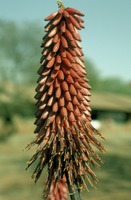
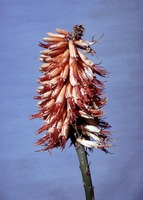
![Holotype of Aloe excelsa A.Berger var. excelsa [family ASPHODELACEAE]](/fsi/img/size1/alukaplant/pre/phase_01/pre0003/pre0683943-0.jpg)
Holotype of Aloe excelsa A.Berger var. excelsa [family ASPHODELACEAE]
Marloth, H.W.R., #3888
1903-12-01
Specimens
Zimbabwe
Holotype of Aloe excelsa A.Berger var. excelsa [family ASPHODELACEAE] (stored under name)
![Holotype of Aloe excelsa A.Berger var. excelsa [family ASPHODELACEAE]](/fsi/img/size1/alukaplant/pre/phase_01/pre0005/pre0592115-0.jpg)
Holotype of Aloe excelsa A.Berger var. excelsa [family ASPHODELACEAE]
Marloth, H.W.R., #3888
1903-12-01
Specimens
Zimbabwe
Holotype of Aloe excelsa A.Berger var. excelsa [family ASPHODELACEAE] (stored under name)
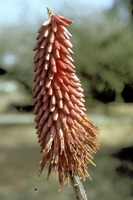
![Holotype of Aloe excelsa A.Berger var. breviflora L.C.Leach [family ASPHODELACEAE]](/fsi/img/size1/alukaplant/srgh/phase_01/srgh0001/srgh0106221-1.jpg)
Holotype of Aloe excelsa A.Berger var. breviflora L.C.Leach [family ASPHODELACEAE]
Royle, #14111
25-08-1968
Specimens
Mozambique
Holotype of Aloe excelsa A.Berger var. breviflora L.C.Leach [family ASPHODELACEAE] (stored under name)
![Holotype of Aloe excelsa A.Berger var. breviflora L.C.Leach [family ASPHODELACEAE]](/fsi/img/size1/alukaplant/srgh/phase_01/srgh0003/srgh0106221-3.jpg)
Holotype of Aloe excelsa A.Berger var. breviflora L.C.Leach [family ASPHODELACEAE]
Royle, #14111
25-08-1968
Specimens
Mozambique
Holotype of Aloe excelsa A.Berger var. breviflora L.C.Leach [family ASPHODELACEAE] (stored under name)
![Holotype of Aloe excelsa A.Berger var. breviflora L.C.Leach [family ASPHODELACEAE]](/fsi/img/size1/alukaplant/srgh/phase_01/srgh0002/srgh0106221-2.jpg)
Holotype of Aloe excelsa A.Berger var. breviflora L.C.Leach [family ASPHODELACEAE]
Royle, #14111
25-08-1968
Specimens
Mozambique
Holotype of Aloe excelsa A.Berger var. breviflora L.C.Leach [family ASPHODELACEAE] (stored under name)

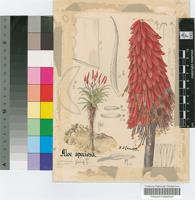
Aloe excelsa A.Berger var. breviflora L.C.Leach
Lansdell
Paintings
Aloe excelsa A.Berger var. breviflora L.C.Leach [family ASPHODELACEAE]
![Isotype of Aloe excelsa A.Berger var. breviflora L.C.Leach [family ASPHODELACEAE]](/fsi/img/size1/alukaplant/pre/phase_01/pre0007/pre0355897-0.jpg)
Isotype of Aloe excelsa A.Berger var. breviflora L.C.Leach [family ASPHODELACEAE]
Leach, #14111
1968-08-25
Specimens
Mozambique
Isotype of Aloe excelsa A.Berger var. breviflora L.C.Leach [family ASPHODELACEAE] (stored under name)
![Isotype of Aloe excelsa A.Berger [family ASPHODELACEAE]](/fsi/img/size1/alukaplant/bol/phase_01/bol0004/bol140234.jpg)
Isotype of Aloe excelsa A.Berger [family ASPHODELACEAE]
Marloth, R., #3888
1914-09-01
Specimens
Zimbabwe
Isotype of Aloe excelsa A.Berger [family ASPHODELACEAE] (stored under name); Verified by Hardy&Glen, 1986/10
![Isotype of Aloe excelsa A.Berger [family ASPHODELACEAE]](/fsi/img/size1/alukaplant/bol/phase_01/bol0005/bol140235.jpg)
Isotype of Aloe excelsa A.Berger [family ASPHODELACEAE]
Marloth, R., #3888
1914-09-01
Specimens
Zimbabwe
Isotype of Aloe excelsa A.Berger [family ASPHODELACEAE] (stored under name); Verified by Hardy&Glen, 1986/10
![Isotype of Aloe excelsa A.Berger [family ASPHODELACEAE]](/fsi/img/size1/alukaplant/bol/phase_01/bol0003/bol140233.jpg)
Isotype of Aloe excelsa A.Berger [family ASPHODELACEAE]
Marloth, R., #3888
1914-09-01
Specimens
Zimbabwe
Isotype of Aloe excelsa A.Berger [family ASPHODELACEAE] (stored under name); Verified by Hardy&Glen, 1986/10
![Aloe excelsa var. breviflora L.C. Leach [family ALOACEAE]](/fsi/img/misc/plants/static_thumbs/flora_zambesiaca_icon96.jpg)
Aloe excelsa var. breviflora L.C. Leach [family ALOACEAE]
FZ, Vol 12, Part 3, page 48, (2001) Author: S. Kativu
Royal Botanic Gardens, Kew (K)
Reference Sources
Not known elsewhere
Leaves up to c. 12 cm wide, usually without prickles. Racemes c. 5 cm in diameter; perianths c. 20 mm long.
![Aloe excelsa [family ALOACEAE]](/fsi/img/misc/plants/static_thumbs/cover_florasa_icon96.jpg)
Aloe excelsa [family ALOACEAE]
Flora of South Africa, (2003) Author: Dr J.P. Roux
South African National Biodiversity Institute, Compton Herbarium, Cape Town (SAM)
Reference Sources
Aloe excelsa is found in Botswana and the Northern Province; also in Zambia and Zimbabwe. It occurs on rocky outcrops and hillÂsides, very often in shade in thick bush in mopane or msasa woodland. Its area of distribution is characterised by hot summers with modÂerate to low rainfall and warm, dry winters. Map 82.
Trees; stems simple, 2-4 m tall. Leaves ± 30, 500-900 x 60-150 mm, channelled, olive-green, tinged reddish, lower surface usually with few scattered prickles. Inflorescence with ± 6-12 racemes, 0.8-1.0 m tall; racemes erect to suboblique, cylindric-conical, very dense; bracts deltoid-acute, 4-6 x 3-6 mm, 3-5-nerved. Flowers scarlet to reddish orange, 25-35 mm long, cylindric-ventricose; outer segments connate in basal quarter, inner segÂments free; pedicels 1-5 mm long. Anthers exserted 7-15 mm. Ovary ±6x2 mm; style exserted 10-15 mm. Fruit 17-20 x 11-12 mm, blue-grey. Flowering time July to September.
Aloe excelsa var. excelsa [family ALOACEAE]
FZ, Vol 12, Part 3, page 48, (2001) Author: S. Kativu
Royal Botanic Gardens, Kew (K)
Reference Sources
Leaves up to 15 cm wide, usually with scattered prickles on the lower surface. Racemes 6–7 cm in diameter; perianths 28–32 mm long.
Aloe rupestris [family ALOACEAE]
Flora of South Africa, (2003) Author: Dr J.P. Roux
South African National Biodiversity Institute, Compton Herbarium, Cape Town (SAM)
Reference Sources
Aloe rupestris occurs in Swaziland, KwaZulu-Natal and Mozambique in Zululand thornveld, sometimes in dense bush, usually on rocky outcrops. It grows in areas with warm, completely frost-free winters. There is a sight record of this species from southern MozamÂbique, quoted by Reynolds (1950: 475). Map 79.
Trees; stems 6-8 m tall, usually simple. Leaves 3CMK), erect to recurved, 300-750 x 35-100 mm, channelled, deep green, without surface prickles. Inflorescence with 12-18 racemes, 1.0-1.3 m tall; racemes very dense, cylindric; bracts oblong, 1-2 x 2-3 mm. Flowers orange-yellow in bud, lemon at flowering, 15-20 mm long, cylindric-ventricose; outer segments connate in lower half, inner segments free but dorsally adnate to outer for ± 5-6 mm; pedicels 1-2 mm long. Anthers exserted 7-15 mm; filaÂments vermilion. Ovary 4-5 x 2-3 mm, green; style deep orange, exserted 7-20 mm. Fruit not seen. Flowering time August to September.
Aloe marlothii [family ALOACEAE]
Flora of South Africa, (2003) Author: Dr J.P. Roux
South African National Biodiversity Institute, Compton Herbarium, Cape Town (SAM)
Reference Sources
Aloe marlothii characteristically grows on rocky hills on the highveld of the Northern Province, Mpumalanga and Gauteng, but may occur in a wide variety of habitats elsewhere. The vegetation and climate vary considerably across its range. Records of this species from Zimbabwe and Malawi (e.g. Jeppe 1969: 36) are probably based on misidentifications of A. excelsa (no. 115), which appears similar when not in flower or fruit.
Trees 2^(-10) m tall; stems simple. Leaves 40-50, arcuate-incurved to spreading or slightÂly recurved with age, 750-1500 x 75-250 mm, channelled to D-shaped in section, glaucous, usually with irregular prickles on both surfaces, these normally fewer on upper surface. Inflorescence of spreading to rarely erect, usuÂally secund, rarely cylindric racemes, with up to 30 branches; bracts ovate-acute, 4-9 x 2-5 mm, 3-5-nerved. Flowers yellow to red in bud, yelÂlow to orange at flowering, cylindric to ventri-cose, 22-35 mm long; outer segments connate for one third to half their length, inner segments adnate to outer in basal third; pedicles 3-5 mm long. Anthers exserted 8-20 mm. Ovary 5.0-9.0 x 1.5-5.0 mm, green; style exserted 6-20 mm. Fruit 19-21 x 10-12 mm, grey.
Aloe excelsa A. Berger [family ALOACEAE]
FZ, Vol 12, Part 3, page 48, (2001) Author: S. Kativu
Royal Botanic Gardens, Kew (K)
Reference Sources
Small tree, 2–6 m high, stem simple, clothed in withered leaf remains. Leaves in a compact rosette at the stem apex, spreading becoming recurved; lamina to 1 m long, up to 15 cm wide at the base, lanceolate-attenuate, deeply channelled, dull green often tinged reddish, without spots, usually with scattered reddish-brown prickles on the lower surface; margin with pungent deltoid reddish-brown teeth 4–6 mm long and 15–25 mm apart. Inflorescences 1–4, erect to 1 m tall above the leaf rosette; peduncle stout, up to c. 6-branched, the lower branches rebranched; branches spreading upwards, subtended by brown scarious deltoid bracts to c. 10 × 15 mm, with scattered sterile bracts below each raceme. Racemes erect, 15–25 × 5–7 cm, cylindric, very densely flowered; bracts 4–6 × 4 mm, rounded, scarious, buff-coloured, reflexed; pedicels c. 1 mm long. Perianth bright glossy red to reddish-orange or occasionally almost white, 20–32 mm long, c. 5 mm in diameter across the ovary, widening to c. 7 mm at the middle and narrowing slightly toward the mouth, cylindrical-ellipsoid; outer segments free for c. three-quarters, with tips recurved. Stamens and stigma exserted c. 10 mm; stamens with filaments purplish, anthers orange, stigma orange-coloured. Capsule and seeds not seen.

Euphorbia luapulana L.C. Leach [family EUPHORBIACEAE]
FZ, Vol 9, Part 5, (2001) Author: S. Carter & L.C. Leach
Royal Botanic Gardens, Kew (K)
Reference Sources
Known only from the type collection and described from a plant cultivated in Harare
Spiny succulent subshrub to 1 m high, branched from the base, sparingly rebranched above.Branches 4-angled, c. 10 mm in diameter, usually tapered towards the base to 5–6 mm in diameter; angles sinuate with tubercles c. 15 mm apart along the margins.Spine shields to 10 mm long, narrowly decurrent ± to the flowering eye below; spines 5–8 mm long, widely divergent to ± deflexed; prickles c. 2 mm above the spines, 1–1.5 mm long, subparallel.Leaves c. 1 × 1.25 mm, deltate, deciduous.Cymes solitary, simple, subsessile; peduncle and cyme branches to 1 mm long, purplish; bracts c. 1 × 1.5 mm, subquadrate, rose-coloured.Cyathia 2.5 × 2.5–4 mm, with funnel-shaped involucres; glands c. 0.75 × 2 mm, elliptic, touching, greenish-yellow; lobes 0.75 × 0.75 mm, ± fan-shaped, shortly bilobed.Male flowers 10–15: bracteoles 2.5 mm long, filiform; stamens c. 3 mm long, anthers pinkish.Female flower: styles c. 2 mm long, shortly united, spreading, recurved, apices thickened.Capsule c. 2.75 × 3.5 mm, very obtusely lobed, eventually bright red; pedicel 1 mm long.Seed 1.75 × 1.5 mm, broadly ellipsoid, verrucose, orange-brown with scattered markings.
Oeceoclades maculata Lindl. Lindl. [family ORCHIDACEAE]
FZ, Vol 11, Part 2, (1998) Author: I. la Croix & P.J. Cribb
Royal Botanic Gardens, Kew (K)
Reference Sources
Glabrous, terrestrial herb 20–40 cm high; roots stout, c. 4 mm in diameter.Pseudobulbs 2–4 × 1.5–2 cm, ovoid, oblong or cylindrical, covered when young with pale brown imbricate cataphylls, 1-leafed.Leaf with a petiole 1–2 cm long, articulated ± at the base; lamina 10–30 × 2.5–5 cm, oblong-oblanceolate or oblong-elliptic, conduplicate towards the base, coriaceous, grey-green mottled with dark green.Inflorescence erect, simple or with 1–2 short branches, fairly laxly 10–20-flowered.Pedicel and ovary 10–12 mm long; bracts lanceolate, acuminate, up to 20 mm long at base of the inflorescence.Sepals and petals greenish-white, greenish-pink or straw-coloured; lip white with 2 purple-red blotches at the base of the mid-lobe; side lobes purple-veined.Sepals 7–13 × 2–3.2 mm, linear-ligulate or narrowly oblanceolate, obtuse to acute, the dorsal sepal erect, the lateral sepals deflexed.Petals 8.5–11 × 2–4.5 mm, oblong-elliptic, oblique, obtuse.Lip 7–9 mm long, 3-lobed; side lobes erect; mid-lobe 3.5–4.2 mm long, 6–10 mm wide, broadly obovate or reniform, emarginate; disk with 2 approximate, divergent, glabrous basal keels; spur 4–5 mm long, stout, straight, bulbous at tip.Column 4–5 mm long, 2 mm wide, oblique at base or with a short foot.
Page 1 of 1
Previous
Next
Narrow by:
- Resource Type
- Geography